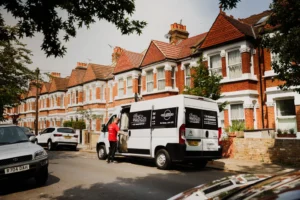
Many businesses do not just need to send one parcel from one place to another. They need to deliver stock, equipment, documents, parts, samples or supplies to several locations, often on the same day or within a planned schedule.
This is where multi-drop delivery becomes useful.
Instead of arranging separate courier bookings for each destination, a business can group several deliveries into one planned route. This can reduce admin, improve efficiency and make regular delivery activity easier to manage.
For businesses that deliver to multiple stores, branches, customers, sites or offices, a multi-drop delivery service can be a practical way to keep goods moving without creating unnecessary complexity.
What is multi-drop delivery?
Multi-drop delivery is a courier service where goods are collected from one or more locations and delivered to multiple destinations as part of a planned route.
In simple terms, multi-drop delivery means one vehicle carries out several deliveries during the same journey. Each “drop” is a separate delivery point, and the route is planned so the driver can complete each stop as efficiently as possible.
For example, a business may need to send stock to five retail stores, equipment to three sites, or customer orders to several addresses in the same region. Rather than booking five separate deliveries, those stops can be grouped into one coordinated route.
Multi-drop delivery is especially useful for businesses that need a more organised way to manage repeated or multi-location delivery requirements.
How does multi-drop delivery work?
A multi-drop courier service usually starts with the business confirming what needs to be collected, where each item needs to go and whether any of the drops have specific timing or handling requirements.
The courier then plans the route around the delivery addresses, item types, vehicle requirements and delivery priorities.
A typical multi-drop delivery process looks like this:
- The business confirms the collection point.
- The items are prepared and labelled for each destination.
- The delivery addresses and contact details are checked.
- Any access notes, opening hours or timing requirements are shared.
- The courier plans the most sensible route.
- The driver collects the goods.
- Each delivery is completed in route order.
- The business has a simpler delivery process than managing several separate courier jobs.
The main advantage is coordination. Instead of dealing with multiple bookings, multiple drivers and multiple delivery schedules, the business has one planned delivery run.
Which businesses use multi-drop delivery?
Businesses use multi-drop delivery when they need to send goods to several destinations in one coordinated route. It is commonly used by retailers, wholesalers, manufacturers, healthcare providers, construction companies, facilities teams, professional services firms and events businesses.
Multi-drop delivery is not limited to one type of business. It is useful wherever goods need to move between multiple locations.
Retailers
Retailers often use multi-drop delivery to move stock between stores, fulfil local customer orders, supply pop-up locations or deliver items to concessions.
For example, a retailer may need to send new stock to several branches before a weekend promotion. A planned multi-drop route can help ensure each location receives what it needs without the business arranging separate deliveries for every store.
Wholesalers and distributors
Wholesalers and distributors often need to deliver goods to multiple customers or trade locations in the same area.
Multi-drop delivery can help them group those deliveries into a more efficient route. This can be especially useful when supplying regular customers, trade counters, stockists or independent retailers.
Manufacturers
Manufacturers may use multi-drop delivery to send parts, samples, components, packaging, tools or finished goods to several business locations.
This could include deliveries to customers, suppliers, installation teams, repair sites or satellite offices. When the deliveries are planned together, the business can avoid unnecessary duplication and make better use of the courier vehicle.
Construction and facilities businesses
Construction, maintenance and facilities teams often need to move tools, equipment, parts and materials between sites.
A multi-drop courier service can support deliveries to several sites in one route, helping teams keep work moving without pulling internal staff away from their main responsibilities. In some cases, the goods may be better suited to a specialist service, such as pallet delivery or special delivery, especially where items are heavy, bulky or require careful handling.
Healthcare and professional services
Healthcare providers, clinics, offices and professional services firms may use multi-drop delivery to send documents, supplies, equipment or time-sensitive materials to several locations.
For these businesses, delivery reliability matters because delays can affect appointments, operations or client commitments.
Events and marketing teams
Events and marketing teams often need to deliver materials to venues, offices, hotels, exhibition spaces or client sites.
This could include signage, branded materials, display items, brochures, merchandise or equipment. Multi-drop delivery can be useful when several venues or locations need to receive items before a deadline.
What are the benefits of multi-drop delivery for businesses?
Multi-drop delivery helps businesses simplify logistics when there is more than one destination involved.
Fewer separate courier bookings
One of the biggest benefits is reduced admin.
If a business needs to deliver to several locations, booking each delivery separately can quickly become time-consuming. Each job may need its own collection time, delivery address, contact details, pricing and follow-up.
With multi-drop delivery, those deliveries can be managed as one planned run.
Better cost control
Multi-drop delivery can also be more cost-effective than booking several individual courier journeys, especially when the delivery points are in a similar region or can be grouped logically.
This does not mean multi-drop delivery is always the cheapest option, but it can reduce duplication. Instead of paying for multiple separate journeys, the business can make better use of one planned route.
Less pressure on internal teams
Many businesses rely on internal staff to move goods between locations. That can work occasionally, but it becomes inefficient when delivery activity grows.
If office staff, warehouse teams, salespeople or engineers are spending time making deliveries, they are being pulled away from their actual roles. Using a multi-drop courier service helps free up internal teams while keeping deliveries organised.
More reliable delivery planning
Multi-drop delivery can be planned around business priorities.
For example, the most urgent drops can be completed earlier in the route. Deliveries can be planned around opening hours, loading access, site availability or customer requirements.
This is particularly useful when a business has regular delivery needs and wants a more structured approach.
Better use of vehicles
The right vehicle can make a big difference.
A small parcel run may only need a compact van. A larger route may require more space for multiple boxes, equipment or bulky items. If goods are heavier or palletised, the business may need a service designed for larger loads.
Using a courier partner gives the business more flexibility when matching the delivery requirement to the right vehicle and service.
When is multi-drop delivery better than standard courier?
Multi-drop delivery is usually the better option when there are several destinations involved.
| Situation | Standard courier | Multi-drop delivery |
| One urgent item to one destination | Usually the best fit | Usually not needed |
| Several deliveries from one collection point | Can become inefficient | Strong fit |
| Regular supply runs | May require repeat bookings | Easier to schedule |
| Multiple stores or branches | More admin to manage | One planned route |
| Several nearby customers | Can create duplicated journeys | Can group drops efficiently |
| Tight delivery coordination | Depends on the service | Can be route-planned |
| Multi-location business deliveries | Less suitable at scale | Often the better option |
A standard courier is ideal when one item needs to go directly from A to B, especially if it is urgent. For example, if a delivery needs to arrive today, same day delivery may be the right choice.
Multi-drop delivery is better when several items need to go to several places and the business wants to coordinate those stops in one route.
When might multi-drop delivery not be the right option?
Multi-drop delivery is useful, but it is not always the best solution.
It may not be the right option if:
- There is only one destination
- One item is extremely urgent and needs direct delivery
- Every delivery requires a very tight individual time slot
- The destinations are too spread out to make one route efficient
- Different items need very different handling conditions
- The goods require specialist transport or installation support
In those situations, a different courier service may be better. For example, a time-critical shipment may need same day courier. A delivery with a strict arrival window may need timed delivery. A fragile, high-value or sensitive shipment may need a more specialist service.
The right choice depends on the delivery requirement, not just the number of stops.
How to plan an effective multi-drop delivery route
Good preparation makes multi-drop delivery easier and more reliable.
Before booking a multi-drop courier service, it helps to prepare the following:
- A full list of delivery addresses
- Contact names and phone numbers for each location
- Clear labels for each item or parcel
- Any opening hours or site access restrictions
- Parking, loading or delivery instructions
- Details of item sizes, weights and quantities
- Any fragile, heavy or high-value goods
- The preferred order of priority, if some drops are more urgent than others
- Any deadlines or required delivery windows
The more information the courier has, the easier it is to plan the route properly.
It is also worth separating urgent drops from flexible drops. If one delivery needs to arrive before a certain time, that should be made clear before the route is planned.
Can multi-drop delivery be used for regular routes?
Yes. Multi-drop delivery can be used for one-off delivery runs or regular scheduled routes, depending on the needs of the business.
Some businesses use multi-drop delivery occasionally, such as when they need to deliver stock for an event, campaign or project.
Others use it as part of their regular operations. For example, a business may need weekly deliveries to branches, regular supply runs to customer sites or scheduled movement of goods between offices and warehouses.
Regular multi-drop delivery can help businesses create a more predictable logistics process. Instead of arranging delivery support each time something needs to move, the business can work with a courier partner to build a repeatable delivery schedule.
This can be especially useful for growing businesses that are handling more deliveries than their internal team can manage comfortably.
How LES Transport supports business multi-drop delivery
LES Transport supports businesses that need flexible, reliable delivery services across England.
For businesses with several delivery points, LES can help plan a multi-drop route based on the collection point, delivery addresses, item types and required timeframe. This can support a wide range of business needs, from retail distribution and customer deliveries to supply runs, equipment movement and scheduled multi-location routes.
Depending on the goods and delivery requirement, LES can also support related services such as parcel delivery, pallet delivery, same day delivery, timed delivery and special delivery.
This means businesses do not have to decide alone whether they need a standard parcel service, a direct courier, a multi-drop run or a more specialist solution. The right service can be matched to the job.
Is multi-drop delivery right for your business?
Multi-drop delivery is worth considering if your business regularly sends goods to more than one location.
It can help reduce admin, improve route planning, make better use of courier vehicles and give your team a clearer way to manage deliveries. It is especially useful when several deliveries can be grouped into one planned run instead of being treated as separate jobs.
For many businesses, the value is not just in moving goods. It is in making the delivery process easier to organise and more reliable for the people depending on it.
If you are regularly delivering to multiple stores, offices, customers, sites or suppliers, a multi-drop courier service may be a better fit than booking separate deliveries each time.
Contact LES Transport to discuss your delivery requirements or request a quote for multi-drop delivery.
FAQs
What is multi-drop delivery?
Multi-drop delivery is a courier service where goods are delivered to multiple destinations as part of one planned route. It is useful when a business needs to send parcels, stock, equipment or supplies to several locations.
How do businesses use multi-drop delivery?
Businesses use multi-drop delivery to deliver to multiple stores, branches, customer sites, offices, venues or trade locations. It is commonly used for retail distribution, supply runs, equipment movement, scheduled routes and multi-location customer deliveries.
Is multi-drop delivery cheaper than booking separate couriers?
It can be more cost-effective than booking several separate courier journeys, especially when the delivery locations can be grouped into one efficient route. The cost depends on the number of drops, distance, item size, vehicle requirements and timing.
What types of businesses need multi-drop courier services?
Retailers, wholesalers, distributors, manufacturers, construction firms, facilities teams, healthcare providers, professional services firms and events businesses can all use multi-drop courier services when they need to deliver to several locations.
Can multi-drop delivery be used for regular routes?
Yes. Multi-drop delivery can be used for one-off jobs or regular scheduled delivery routes. This is useful for businesses that need weekly supply runs, branch deliveries, customer routes or planned movement of goods between locations.
What should I prepare before booking a multi-drop delivery?
You should prepare the collection address, delivery addresses, contact details, item descriptions, sizes, weights, opening hours, access notes and any timing requirements. Clear labelling for each destination also helps the route run smoothly.
When is same day delivery better than multi-drop delivery?
Same day delivery is usually better when one urgent item needs to go directly to one destination as quickly as possible. Multi-drop delivery is better when several items need to be delivered to multiple locations as part of one planned route.